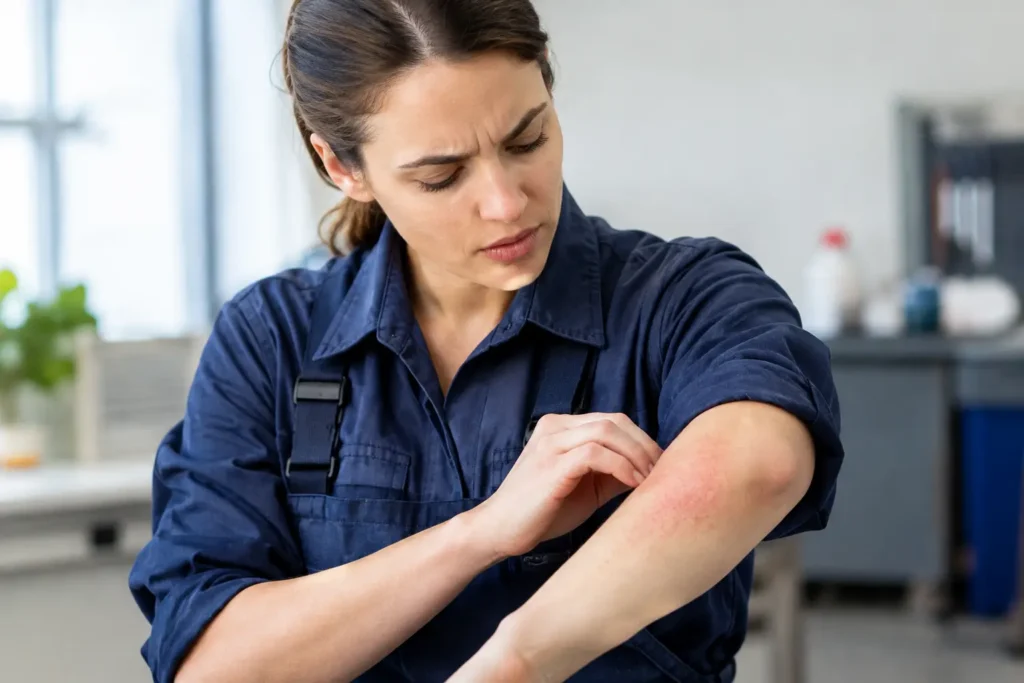
A manager notices several workers reporting hand irritation and asks for “annual health checks for everyone”. The request sounds straightforward, but the right response depends on the risk, the purpose of assessment and what will happen to the findings. This is where screening versus surveillance becomes more than terminology. Getting the distinction right supports proportionate care, legal compliance and defensible workplace recommendations.
For Occupational Health professionals, the question is not simply which test to offer. It is whether there is a credible work-related health risk, whether early disease can be identified, and whether action can prevent further harm. A programme that is poorly targeted may create false reassurance, unnecessary anxiety and data that no one can use. A well-designed programme can protect workers and reveal failures in exposure control before they become widespread.
Health screening is the systematic use of a test, examination or questionnaire to identify people who may have an unrecognised disease, condition or risk factor. It is usually offered to individuals who do not necessarily report symptoms. In Occupational Health, screening may include a pre-placement assessment, cardiovascular risk checks, vaccination review or a workplace wellbeing initiative.
Screening can be valuable, but it does not automatically relate to a workplace exposure. A cholesterol check offered as part of a wellbeing campaign, for example, may support general health but does not establish whether the job is causing illness. Its benefits, limitations, follow-up arrangements and voluntary nature should be clear.
Health surveillance is a systematic and ongoing process for detecting early signs of work-related ill health in workers exposed to specific hazards. Its central purpose is prevention. Individual findings matter, but surveillance also tests whether risk controls are working in practice.
If an employee develops early occupational asthma symptoms, noise-induced hearing change or work-related dermatitis, the response should not stop at clinical advice. The workplace must consider exposure, controls, training, work methods and whether colleagues may be affected. That feedback loop is what makes health surveillance distinct.
The terms can overlap in everyday conversation because surveillance may use screening-type tools, such as questionnaires, audiometry or spirometry. The decisive issue is the context and purpose. A test becomes part of health surveillance when it is linked to a relevant workplace hazard and triggers action to prevent or control work-related harm.
Calling any periodic assessment “surveillance” can lead to programmes that are expensive but clinically weak. Equally, treating legally required surveillance as an optional wellbeing benefit can expose workers and employers to avoidable risk.
Health surveillance may be required under UK health and safety legislation where workers are exposed to particular agents or processes. Examples include risks from hazardous substances, excessive noise, vibration, lead and certain biological agents. Some circumstances require statutory medical surveillance, with specific arrangements and professional roles. The precise duty depends on the hazard, exposure and applicable regulations.
The Occupational Health clinician should therefore avoid a one-size-fits-all annual medical. Frequency, method and referral thresholds must reflect the risk assessment. For a low-risk office-based population, routine lung function testing has little value. For workers regularly exposed to respiratory sensitisers, a structured respiratory surveillance programme may be essential.
A useful starting point is the workplace risk assessment, not the availability of a test. Health surveillance is normally justified when there is a recognised health effect associated with exposure, a reasonable likelihood that the work could cause or worsen it, and a valid way to detect early change.
There must also be a meaningful action following an abnormal result. Detecting early dermatitis is worthwhile because exposure can be reduced, skin protection reviewed and timely treatment arranged. Testing without a pathway for workplace adjustment, clinical referral or control improvement does not meet the preventive purpose.
Ask four practical questions before recommending a programme:
These questions also help explain recommendations to managers. Health surveillance is not a substitute for controlling exposure at source. It is a check on health outcomes and on the adequacy of the control system.
For wet work and irritant or sensitising substances, surveillance may involve baseline assessment, regular skin checks or questionnaires, and escalation for clinical review where symptoms develop. The wider response may include reviewing glove selection, handwashing facilities, product substitution and training.
For occupational noise exposure, audiometry can identify early hearing changes. Results should be interpreted against exposure history, hearing protection arrangements and non-occupational factors. A concerning pattern may prompt individual counselling, referral where appropriate and a review of noise controls across the relevant work area.
For respiratory sensitisers, surveillance often combines a baseline respiratory assessment with periodic questionnaires and prompt assessment of new symptoms. Timing matters. Symptoms that improve away from work can be particularly informative, and delayed referral may affect outcome.
Hand-arm vibration surveillance may use structured symptom questioning and examination to identify early vascular, neurological or musculoskeletal effects. It sits alongside exposure monitoring, tool maintenance, trigger-time controls and worker education.
An effective programme begins before the first appointment. Occupational Health needs enough detail to understand who is exposed, to what, how often and under which controls. Job title alone is rarely sufficient. Two workers with the same title may have very different tasks and exposures.
Set a clear baseline where appropriate, then define intervals that match the hazard and the level of risk. Higher-risk or newly exposed workers may need earlier review. A staged approach can be proportionate: a trained responsible person may carry out an initial questionnaire or inspection, with referral to an Occupational Health professional for positive responses, uncertainty or suspected disease.
Every programme should have agreed pathways for normal findings, abnormal findings, urgent concerns, clinical referral and fitness-for-work advice. This is particularly important where work is safety-critical. The clinician must distinguish between a health finding, the functional consequences of that finding and the actual demands of the role.
Good records enable comparison over time, but data collection should remain relevant and proportionate. Personal clinical information is confidential. Employers generally need confirmation of attendance, fitness advice, restrictions or adjustments, and aggregate information about workplace trends. They do not need detailed diagnoses without the worker’s informed consent or another clear lawful basis.
Consent should be meaningful rather than a signature on a form. Workers need to understand why surveillance is offered or required, what the assessment involves, how results will be used, who will see them and what happens if they decline. The practical limits of confidentiality should be explained plainly.
A surveillance programme is only as strong as its response to findings. Individual cases should prompt timely clinical management and, where relevant, temporary restrictions or reasonable adjustments. Yet the occupational task is broader: look for patterns.
Several reports of dry, cracked hands in one department may indicate inadequate controls even when no employee has severe dermatitis. Repeated respiratory symptoms in a particular process may require an urgent review of extraction, cleaning methods or chemical handling. Aggregated, anonymised reporting can show managers where controls need attention while protecting individual confidentiality.
Do not overinterpret a single test result. Many health outcomes have multiple causes, and test performance varies. Consider symptoms, exposure history, examination findings, temporal relationship to work and the quality of the measurement. Where uncertainty remains, a careful plan for repeat assessment, specialist input or exposure review is often more defensible than a premature conclusion.
The most common mistake is offering surveillance because it feels reassuring rather than because risk assessment supports it. Other problems include using staff who have not been trained for the assessment, failing to act on positive findings, relying on generic questionnaires without exposure-specific questions, and sending employers excessive clinical detail.
Another pitfall is treating normal results as proof that controls are effective. A normal result is reassuring for that individual at that point in time, but it does not remove the need to maintain exposure controls. Health surveillance complements risk management; it cannot replace it.
For clinicians preparing for MFOM assessments or building day-to-day OH confidence, this distinction offers a reliable framework: start with the hazard, identify the health effect, select a valid method, and plan the action before testing begins. When a manager asks for a health check, the most valuable answer may be a better question: what workplace risk are we trying to prevent?