Welcome to Zosh Occupational Health Academy, a modern digital learning platform dedicated to advancing education in Occupational Medicine, workplace health, and professional clinical practice.


4.9/5 Rating
Our Brands
Supporting doctors, Occupational Health professionals, nurses, technicians, and workplace health practitioners through structured, clinically relevant education and professional development.
WELCOME TO ZOSH ACADEMY
Zosh Occupational Health Academy was established to modernize Occupational Medicine education through intelligent digital learning systems, visual teaching methods, and clinically relevant training.
Unlike traditional lecture-based learning, our programs combine academic depth with practical workplace application, helping healthcare professionals develop confidence in both professional examinations and real-world Occupational Health practice.
Whether you are preparing for MFOM examinations, developing workplace health expertise, or expanding your Occupational Health career, Zosh Academy provides a structured and engaging learning experience designed for modern healthcare professionals.
Our innovative approach combines modern educational technology with practical Occupational Medicine expertise to create a more engaging and effective learning experience.
Structured learning pathways designed to support examination success and clinical confidence.
Practice with SBA-style questions, mock examinations, and real-world Occupational Health scenarios.
Improve understanding and retention through diagrams, animations, and visual memory systems.
Learn anytime, anywhere with fully online course delivery.
Develop skills directly applicable to Occupational Health practice and workplace assessments.
Designed and delivered by experienced UK Occupational Health Physician Dr. Syed Ahmed.
Join a growing international community of healthcare professionals advancing their Occupational Health knowledge through modern, practical, and engaging education.

Our Courses
Explore our most popular Occupational Medicine and workplace health training courses.
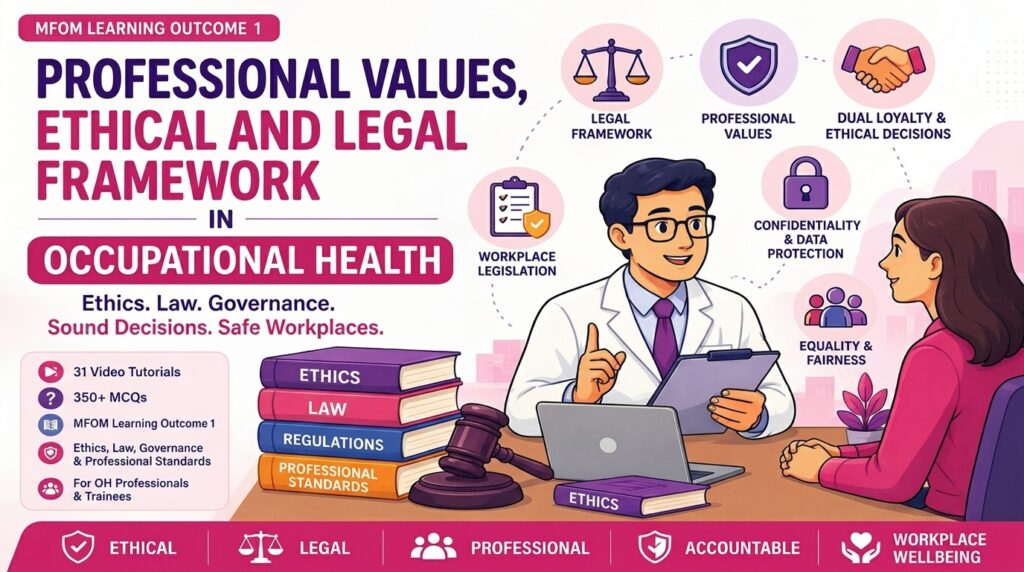
Understand the ethical, legal, and professional principles required for safe and defensible Occupational Health practice.
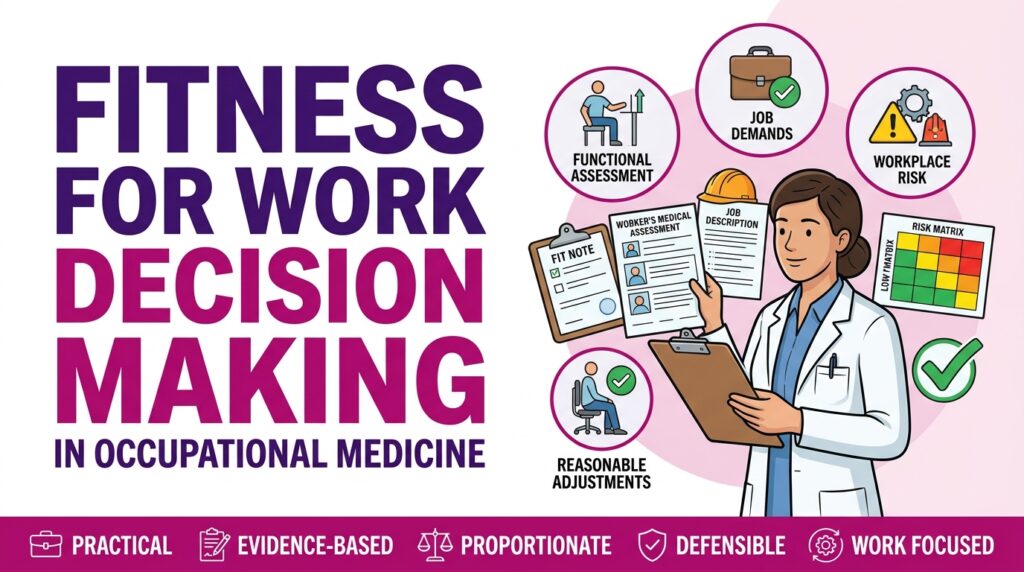
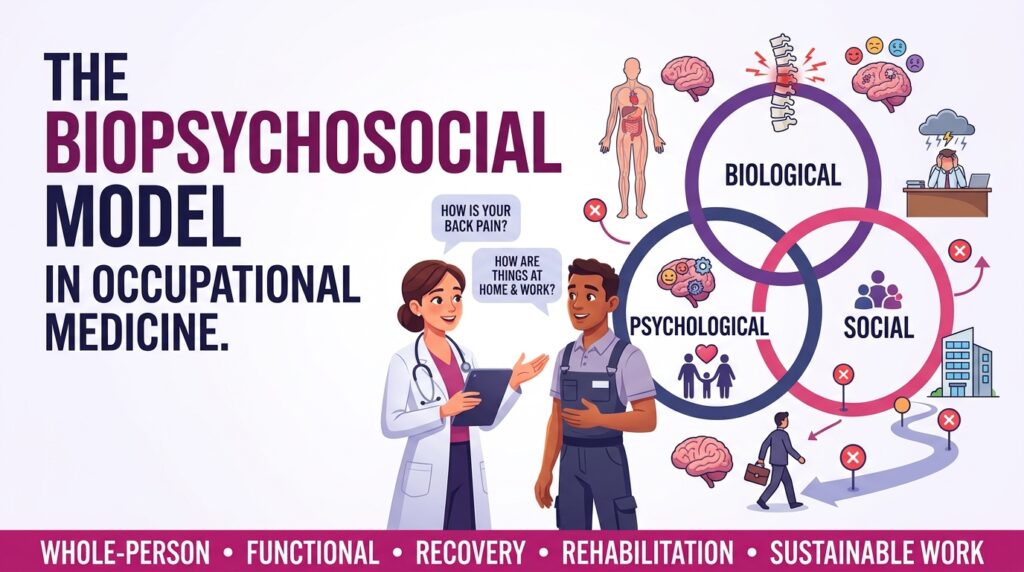
Explore the biological, psychological, social, and workplace factors influencing recovery, disability, and work participation.
Years of Excellence
About Us
Dr. Syed Ahmed is a UK-based Occupational Health Physician, educator, author, entrepreneur, and founder of Zosh Occupational Health Academy.
Drawing on extensive experience across Occupational Medicine, workplace health consultancy, education, and publishing, Dr. Ahmed has developed a modern learning platform designed to make Occupational Health education more engaging, accessible, and clinically meaningful.
His teaching philosophy focuses on clarity, clinical reasoning, visual learning, and practical application to help healthcare professionals succeed both academically and professionally.
Our innovative approach combines modern educational technology with practical Occupational Medicine expertise to create a more engaging and effective learning experience.
“The MFOM Unlocked course helped me pass with confidence. The SBA questions and visual lessons are outstanding!”
“Zosh Academy’s interactive lessons and case studies improved my OH skills immensely.”
“Flexible online access allowed me to complete the Health Surveillance training around my schedule. Highly recommend!”
“The expert-led sessions are practical, clinically relevant, and easy to follow.”
“MFOM Unlocked is perfectly structured. Modules, mock exams, and interactive lessons simulate real-world challenges.”
“The MFOM Unlocked course helped me pass with confidence. The SBA questions and visual lessons are outstanding!”
“Zosh Academy’s interactive lessons and case studies improved my OH skills immensely.”
“Flexible online access allowed me to complete the Health Surveillance training around my schedule. Highly recommend!”
“The expert-led sessions are practical, clinically relevant, and easy to follow.”
“MFOM Unlocked is perfectly structured. Modules, mock exams, and interactive lessons simulate real-world challenges.”
“Visual learning and interactive lessons made difficult topics easy to understand and remember.”
“Health Surveillance modules improved my workplace assessment skills. Practical and detailed!”
“Highly recommend Zosh Academy for MFOM exam prep and improving real-world OH practice skills.”
“The online platform is modern and intuitive. Tracking progress and practicing mock exams is efficient and enjoyable.”
“Visual learning and interactive lessons made difficult topics easy to understand and remember.”
“Health Surveillance modules improved my workplace assessment skills. Practical and detailed!”
“Highly recommend Zosh Academy for MFOM exam prep and improving real-world OH practice skills.”
“The online platform is modern and intuitive. Tracking progress and practicing mock exams is efficient and enjoyable.”
Testimonials
Our goal is to make Occupational Medicine learning simple, flexible, and effective. Here are answers to the most common questions from students about our courses, platform, and support.
Didn’t find what you were looking for? We’re happy to help
Call Us Any Time
01524237322
We offer a wide range of Occupational Health courses, including MFOM exam preparation, Health Surveillance training, OH Technician programs, Diploma courses, and short CPD modules.
Yes! Our platform is fully online and mobile-friendly, allowing you to study at your own pace and access course materials whenever and wherever you want.
All courses come with lifetime access, so you can revisit lessons, practice exams, and resources anytime for continuous learning.
Absolutely! Courses include interactive learning modules, visual resources, mock examinations, and voice-guided lessons to enhance understanding and retention.
All courses are designed and delivered by experienced UK Occupational Health Physician Dr. Syed Ahmed, ensuring clinically relevant and practical learning experiences.
Blog & News