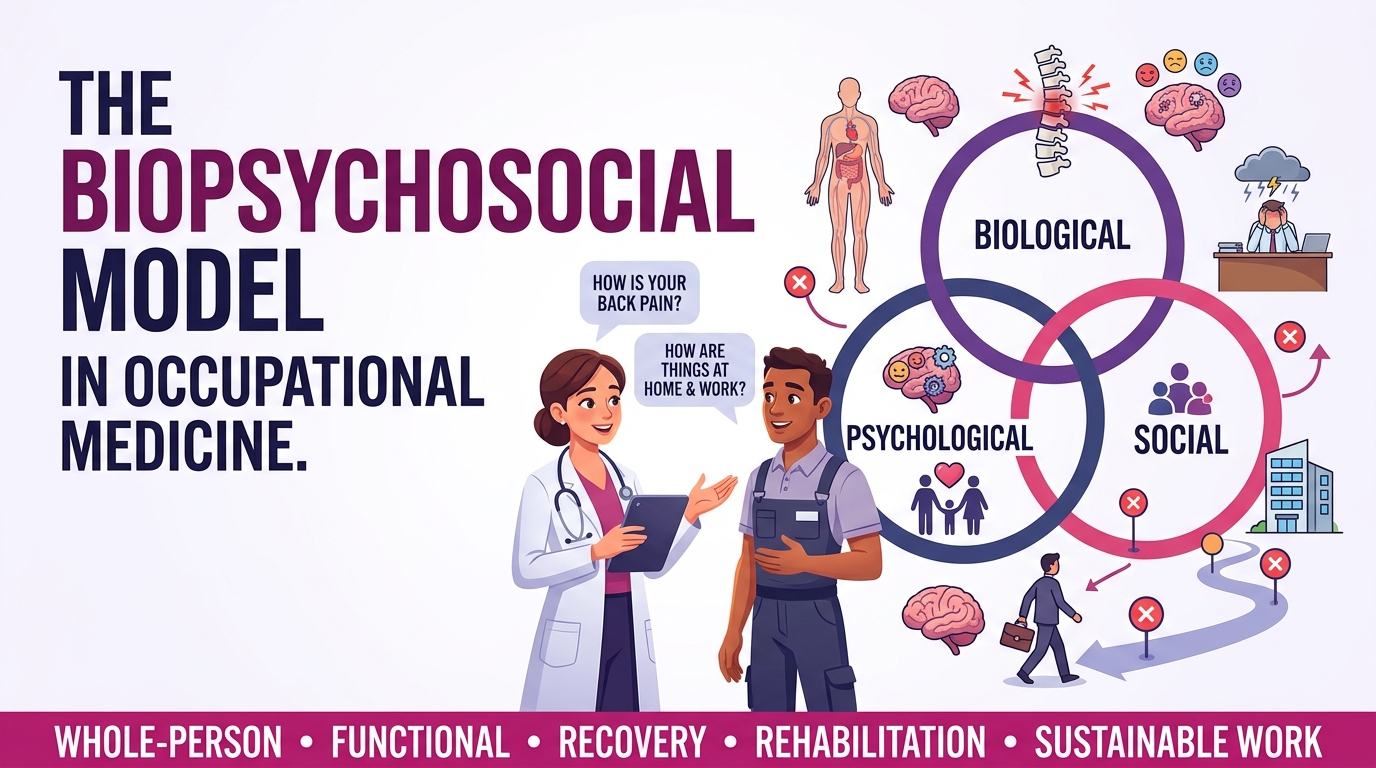
Biological Factors
Disease, injury, pain, physical impairment, medication, fatigue, neurological function, and other medical factors affecting capability.
Musculoskeletal and Mental Health in Occupational Medicine
Understand how biological, psychological, social, and workplace factors interact to influence health, recovery, disability, and sustainable participation in work.
 Course 03
Watch the introductory video to learn how the biopsychosocial model can be applied to complex Occupational Health assessments, rehabilitation, and return-to-work planning.
Most causes of long-term sickness absence, workplace disability, and impaired work performance cannot be fully understood through a purely biomedical model.
Modern Occupational Medicine recognises that health outcomes are shaped not only by disease and injury, but also by psychological factors, social circumstances, workplace influences, personal beliefs, behaviours, and organisational culture.
Understanding these interactions is fundamental to effective Occupational Health practice. This comprehensive course explores the Biopsychosocial Model and its practical application within Occupational Medicine.
Through 44 detailed video tutorials, 300 examination-style multiple choice questions, and 13 structured learning sections, learners will develop a deeper understanding of how biological, psychological, and social factors influence health, recovery, disability, and work participation.
Disease, injury, pain, physical impairment, medication, fatigue, neurological function, and other medical factors affecting capability.
Beliefs, emotions, resilience, coping strategies, fear avoidance, catastrophisation, motivation, and illness perceptions.
Family circumstances, workplace relationships, job demands, organisational culture, financial pressures, and social support.
Understand the development of the Biopsychosocial Model and how it differs from traditional biomedical approaches.
Assess presentations where symptoms, functional limitations, and objective clinical findings may not fully align.
Identify personal, psychological, social, and workplace factors that can delay recovery or increase disability.
Recognise fear avoidance, catastrophisation, reduced confidence, workplace conflict, and unhelpful illness beliefs.
Evaluate how symptoms affect capability, reliability, attendance, work performance, and sustainable participation.
Formulate practical adjustments, rehabilitation strategies, and evidence-based return-to-work recommendations.
A major focus of the programme is the assessment and management of musculoskeletal disorders, which represent a leading cause of occupational disability and long-term sickness absence.
Learners will explore chronic pain, persistent musculoskeletal symptoms, functional limitations, illness behaviour, fear of movement, reduced confidence, and workplace barriers to recovery.
The course develops practical skills in conducting biopsychosocial assessments and producing recommendations that support recovery, rehabilitation, workplace participation, and sustainable employment.
Mental health conditions are explored within a practical Occupational Health and workplace rehabilitation framework.
Assess mood, motivation, cognition, function, attendance, and workplace support requirements.
Understand symptoms, triggers, avoidance behaviours, work demands, and adjustment options.
Evaluate workplace stressors, organisational factors, relationships, workload, and available support.
Consider trauma symptoms, occupational triggers, function, safety, and phased rehabilitation.
Assess emotional responses to workplace or personal change and their effect on work participation.
Approach medically unexplained or functional symptoms using a balanced, respectful, and evidence-based framework.
Throughout the course, emphasis is placed on evidence-based practice, effective communication, workplace interventions, reasonable adjustments, rehabilitation planning, and collaborative working.
Learners will develop practical skills in working with employees, employers, managers, healthcare professionals, and rehabilitation teams to address barriers and support successful work participation.
Recommendations are focused on supporting recovery, maintaining appropriate work participation, reducing prolonged sickness absence, and achieving safe and sustainable return to work.
Understand health and disability beyond diagnosis and the traditional biomedical model.
Conduct structured biopsychosocial assessments for complex Occupational Health presentations.
Identify biological, psychological, social, and workplace barriers to recovery.
Formulate practical workplace adjustments and rehabilitation recommendations.
Deliver Occupational Health advice that promotes recovery, work participation, and long-term wellbeing.
Get full access to 44 video tutorials, 300 examination-style questions, and 13 structured learning sections for £220.